
Peer-led tables, hosted by government.
Transformation Strategy
This session explores how public sector leaders are moving beyond legacy systems to build joined-up, citizen-first services.
- Moving beyond legacy systems to build joined-up, citizen-first services that align platforms, data and people around shared outcomes
- What does a credible transformation strategy actually look like at departmental level?
- The programme leadership and cross cutting collaboration needed to deliver at pace and scale.
Discussion hosts:
-
Richard Baines, Deputy Director of Digital, Department for Environment, Food and Rural Affairs
-
Jane Brine, Deputy Director Bereavement Service and Tax Credits, HM Revenue & Customs
-
Rishi Sharma, Head of Public Sector, Esynergy
- Neil McIvor, Head of Data for Public Services, Esynergy
.png?width=287&height=86&name=example%20%20(500%20x%20150%20px).png)
Digital Workplace
Retaining talent, closing skills gaps and fostering innovation depends as much on internal tools and culture as it does on strategy.
- Building platforms, products and services that create a simple, joined-up and personalised experience for civil servants across departments
- Are your internal tools and working practices keeping pace with what your departments need to deliver?
- What it takes to put people genuinely at the centre of your department's digital transformation
Discussion hosts:
-
Jenny O'Connor, Deputy Director End User Compute Services, Department For Education
-
Chris Chambers, Transformation Programme Director for the Manchester Digital Campus, Government Property Agency
-
Ed O'Brien, Cloud Practice Director, Sopra Steria
-
Richard Caddick, Consulting Director, Sopra Steria
%20(6).png?width=360&height=108&name=example%20%20(500%20x%20150%20px)%20(6).png)
Operational Transformation
With one in four government digital systems outdated and growing pressure to deliver more with less, transforming how government operates is no longer optional. This session explores how departments can build the operational foundations needed to become faster, more efficient and more citizen-focused.
- Modernising the digital infrastructure and tools that underpin government operations, reducing complexity and enabling more efficient ways of working.
- Embedding operational transformation across departments, streamlining processes and connecting systems to improve service delivery.
- Delivering transformation at scale, moving beyond individual initiatives to build lasting operational capability across government.
Discussion hosts:
-
David Swainston, Finance Director, CDIO Portfolio, HM Revenue & Customs
-
Nagesh Reddy, Chief Portfolio Officer, Department for Work & Pensions
%20(13).png?width=320&height=96&name=example%20%20(500%20x%20150%20px)%20(13).png)
Digital Experience
Seamless, inclusive digital services are no longer aspirations, they are expectations, yet significant barriers persist for too many citizens.
- Low digital confidence, inaccessible platforms and uneven service quality continue to leave people behind
- How do you design digital experiences that work for everyone, not just the digitally fluent?
- What data insights and inclusive design can do to bridge the divide and raise the standard of service delivery across government.
Discussion hosts:
-
Brie Cawthorne, Head of User Centred Design, Government Commercial Agency
- Alison Simpson, Head of Content Design, Department for Work & Pensions
-
Jenna Shanks, AI & CX Lead for Central Gov, Telcos & Insurance, NiCE
- Tilly Rawlinson, Sales Associate, Strategic Accounts, NiCE
%20(16).png?width=292&height=88&name=example%20%20(500%20x%20150%20px)%20(16).png)
Citizen Experience
Citizens increasingly expect public services to match the speed, simplicity and personalisation they experience elsewhere, yet the gap between expectation and delivery remains wide.
- Redesigning services around citizen needs without unlimited budgets or the luxury of starting from scratch.
- How do you close the gap between what citizens expect and what government can realistically deliver?
- Building the trust and responsiveness that genuinely citizen-centred public services depend on.
Discussion hosts:
-
Cathy Dutton, Deputy Director - Service Design & Delivery, Department for Education
- Jen Staves, Director, Test, Learn and Grow, HM Revenue & Customs
%20(18).png?width=299&height=90&name=example%20%20(500%20x%20150%20px)%20(18).png)
Operationalising AI
Moving AI from promising pilot to embedded, everyday tool remains the defining delivery challenge for senior civil servants across government.
- The gap between experimental AI projects and the scaled, reliable deployment needed to drive meaningful change in how public services are designed and delivered
- How do you build the infrastructure, governance and organisational conditions needed to take AI out of the lab and into the mainstream?
- What senior leaders are doing to move beyond the pilot phase and embed AI into the core operations of their department?
Discussion hosts:
-
Tracy Poulton, Chief AI Office Delivery Lead, HM Revenue & Customs
- Euan Neill, Head of Innovation, ACE, Home Office
%20(21).png?width=326&height=98&name=example%20%20(500%20x%20150%20px)%20(21).png)
AI Governance
Responsible AI deployment across government depends on governance frameworks that are robust in practice, not just in principle.
- Developing and implementing the structures needed to oversee AI systems with confidence, from policy to procurement to deployment
- How do you move from theory to practice and build frameworks that genuinely underpin public trust in government's use of AI?
- What effective AI governance looks like at departmental level and how to lead it without stifling innovation?
Discussion hosts:
-
Eilidh Mclaughlin, Deputy Director, Digital Ethics, Inclusion and Assurance, Scottish Government
- Dr Nayyab Naqvi - Head of Technology for AI Enablement, Government Digital Service
%20(9).png?width=273&height=82&name=example%20%20(500%20x%20150%20px)%20(9).png)
AI Sovereignty
As government deepens its reliance on AI, a critical question emerges: who controls the technology underpinning our public services?
- From data sovereignty and supply chain dependencies to geopolitical risk, AI sovereignty is fast becoming a strategic leadership concern
- How do you reduce exposure to foreign-owned infrastructure without slowing the pace of responsible AI adoption?
- What it means in practice to build a resilient, independently capable AI ecosystem at departmental level?
Discussion hosts:
-
Sumitra Varma, Deputy Director, Probations and Electronic Monitoring, Ministry of Justice
- Tommaso Spinelli, Cloud and Platforms Service Owner, Government Digital Service
-
Ann Walker, Senior Vice President, Mastek
- Sandip Sarda, VP Public Sector, Mastek
%20(10).png?width=290&height=87&name=example%20%20(500%20x%20150%20px)%20(10).png)
Decision Making
Senior leaders are expected to make consequential decisions at increasing speed, often with incomplete evidence and competing pressures from policy, delivery and finance.
- Getting the right information to the right people at the moment a decision is being made, not weeks afterwards
- How confident are you that decisions across your department are informed by evidence rather than instinct or hierarchy?
- What senior leaders are doing to improve the quality, speed and transparency of decision making across their organisations.
Discussion hosts:
-
Emma Presley-Abbott, Deputy Director, Head of Data Insight & Analytics, Department for Work & Pensions
-
Saleyah Miah, Head of BOLD Prevention, Ministry of Justice
%20(7).png?width=347&height=104&name=example%20%20(500%20x%20150%20px)%20(7).png)
Cross-Government Insights
Sharper decision-making across government depends on insight that transcends departmental boundaries, yet the infrastructure to surface it consistently remains underdeveloped.
- How harnessing technology, standardised processes and centralised functions can unlock the full potential of the DDaT profession
- How do senior leaders turn cross-government data into intelligence that drives informed decisions and reveals key trends?
- What it takes to translate shared insight into more effective public services and better outcomes in your own department.
Discussion hosts:
-
Toni Peters, Deputy Commercial Director - Grants and Innovation, The Department for Business and Trade
- Marayam Ahmad, Head of Data First Programme, Ministry of Justice
- Bill Burnett, Account Executive, Snowflake
- Ankit Mathur, Solutions Architect, Amazon Web Services
%20(24).png?width=340&height=102&name=example%20%20(500%20x%20150%20px)%20(24).png)
Government Efficiency
This session explores how government departments can embed AI into end-to-end workflows to deliver measurable efficiency at scale.
- The practical barriers to integrating AI into existing processes, governance, and ways of working.
- How can departments connect AI across data, decisions, and actions, rather than relying on isolated use cases?
- How are departments moving from AI experimentation to measurable efficiency in practice?
Discussion hosts:
-
Rizwana Praveen, Director/SRO Public Authorities Fraud, Error and Recovery Act (Delivery), Department for Work & Pensions
%20(5).png?width=360&height=108&name=example%20%20(500%20x%20150%20px)%20(5).png)
Cutting Costs Without Cutting Capability
Fiscal pressure is forcing departments to find savings at the same time as demand for public services continues to rise, and the temptation is to cut what is easiest to measure rather than what matters least.
- Distinguishing genuine efficiency from short-term cost avoidance that simply moves spend elsewhere or stores up cost for later
- Where can your department take cost out without eroding delivery capacity, resilience or the skills you will need in three years' time?
- What senior leaders are doing to protect capability while meeting savings targets, and how they are evidencing the trade-offs
Discussion hosts:
-
Ruquiya Isa, Deputy Director Governance, Assurance & Partnerships, Department for Education
%20(14).png?width=305&height=91&name=example%20%20(500%20x%20150%20px)%20(14).png)
Data Interoperability
Seamless service delivery across government depends on data that is accessible, readable and trusted, yet too many departments still operate in silos.
- Ensuring data works across different platforms, systems and agencies without sacrificing accuracy or integrity.
- How do you build the standards and governance needed to make cross-departmental data sharing a reality?
- How prioritising interoperability fosters better collaboration, sharper decision-making and improved outcomes for citizens.
Discussion hosts:
-
Dean Paulley, Head of Product, Ordnance Survey
%20(15).png?width=288&height=87&name=example%20%20(500%20x%20150%20px)%20(15).png)
Agentic AI
Agentic AI is moving government beyond systems that simply analyse and recommend towards systems that can act, make decisions and execute tasks. This session explores the opportunities this creates for more responsive public services, alongside the governance and safeguards required as AI becomes increasingly autonomous.
- Exploring where agentic AI can transform public services, from automating casework and triaging public health data to managing complex infrastructure systems.
- Understanding what greater AI autonomy means for government, particularly when systems begin to take actions and make decisions on behalf of public sector organisations.
- Building transparency, accountability, cybersecurity and public trust into agentic AI, ensuring greater autonomy is matched by appropriate governance and human oversight.
Discussion hosts:
-
Chris Page, AI Research Engineer, Department for Digital, Culture, Media & Sport (BDUK)
%20(20).png?width=276&height=83&name=example%20%20(500%20x%20150%20px)%20(20).png)
AI for Public Services
AI is moving out of internal productivity tools and into the services citizens actually use, which raises the stakes considerably for accuracy, accessibility and accountability.
- Applying AI to casework, correspondence, eligibility and frontline service delivery where errors have direct consequences for the public
- Where does AI genuinely improve the service a citizen receives, and where does it simply add a layer between them and a decision?
- What senior leaders are doing to deploy AI in public-facing services in a way that is safe, explainable and demonstrably better for users?
Discussion hosts:
-
Keith Dargie, Chief Information and Digital Officer, Crown Office and Procurator Fiscal Service
%20(22).png?width=291&height=87&name=example%20%20(500%20x%20150%20px)%20(22).png)
Cross-Government Functions
This session explores how to enhance cooperation within and across different levels of government
- The practical barriers to standardising and integrating functions across departments.
- How are departments making cross-cutting collaboration work in practice, not just in principle?
- How integrating technology, standardising processes and centralising management can build a more efficient, agile and collaborative department
Discussion hosts:
-
Kate Caulkin, Director of People and Operational Management Insights, National Audit Office
%20(11).png?width=314&height=94&name=example%20%20(500%20x%20150%20px)%20(11).png)
Generative AI
From automating routine tasks to making sense of vast datasets for policy, the possibilities of Generative AI across government are colossal, but knowing where to start is the defining challenge.
- Do you pursue the quick wins that build momentum and demonstrate value, or invest in the systemic transformation that delivers at scale?
- How do you sequence your GenAI ambitions in a way that is credible, responsible and builds confidence across your organisation?
- What senior leaders are doing to move from experimentation to meaningful, lasting deployment
Discussion hosts:
- David Wheable, VP, Consulting Director, Forrester
- Enza Iannopollo, VP, Principal Analyst, Forrester

AI Use Cases
The question for senior leaders is no longer whether to use AI, it is where to deploy it, how to scale it and how to ensure it delivers.
- With the AI Opportunities Action Plan in full flow and AI Exemplars already live across departments, practical real-world applications are moving beyond the experimental
- What can you learn from use cases across healthcare, welfare and policy delivery to accelerate responsible AI adoption in your own department?
- How to cut through the hype and identify the opportunities most likely to deliver in your context
Discussion hosts:
-
Fiona McAdoo, Transformation Director Public Sector, Oracle
- Graeme Bowmaker, Oracle Practice Leader, UKI, IBM
%20(25).png?width=311&height=94&name=example%20%20(500%20x%20150%20px)%20(25).png)

AI for Public Services
AI is moving out of internal productivity tools and into the services citizens actually use, which raises the stakes considerably for accuracy, accessibility and accountability.
- Applying AI to casework, correspondence, eligibility and frontline service delivery where errors have direct consequences for the public
- Where does AI genuinely improve the service a citizen receives, and where does it simply add a layer between them and a decision?
- What senior leaders are doing to deploy AI in public-facing services in a way that is safe, explainable and demonstrably better for users?
Discussion hosts:
-
Bruce Prendergast, CDIO Strategy Lead, HM Revenue & Customs
- Peter Corpe, Industry GTM Leader - EMEA Public Sector, Appian
- Claudia Adeniyi, Account Executive, Appian
%20(2).png?width=350&height=105&name=example%20%20(500%20x%20150%20px)%20(2).png)
User-Centric Design
The average UK citizen spends one and a half weeks a year navigating government bureaucracy, so how do we make it simpler?
- Building services that genuinely work for everyone, regardless of digital confidence, background or need.
- How do you embed user feedback, accessibility and inclusive design into the heart of service delivery?
- What it takes to reduce friction and build trust in citizen-facing services.
Discussion hosts:
- To be Announced soon.
%20(3).png?width=314&height=94&name=example%20%20(500%20x%20150%20px)%20(3).png)
Agentic AI
Agentic AI is moving government beyond systems that simply analyse and recommend towards systems that can act, make decisions and execute tasks. This session explores the opportunities this creates for more responsive public services, alongside the governance and safeguards required as AI becomes increasingly autonomous.
- Exploring where agentic AI can transform public services, from automating casework and triaging public health data to managing complex infrastructure systems.
- Understanding what greater AI autonomy means for government, particularly when systems begin to take actions and make decisions on behalf of public sector organisations.
- Building transparency, accountability, cybersecurity and public trust into agentic AI, ensuring greater autonomy is matched by appropriate governance and human oversight.
Discussion hosts:
-
Scott McKinnon, Chief Security Officer, Palo Alto
- Satpal Biant, Senior Director, UK Public Sector, Palo Alto
%20(4).png?width=287&height=86&name=example%20%20(500%20x%20150%20px)%20(4).png)
Accelerating legacy modernisation using AI
Legacy systems remain one of the biggest sources of risk and constraint across government, with modernisation often seen as too costly and complex to deliver at scale. This session explores how AI is changing what is possible for legacy modernisation.
- How AI is changing legacy modernisation, making migration faster, more feasible and more cost-effective.
- The practical barriers to modernising legacy systems at scale, and how emerging AI capabilities can help overcome them.
- The repeatable practices, tools and delivery patterns enabling more scalable and increasingly self-service approaches to modernisation.
Discussion hosts:
-
To be Announced soon.

AI Strategy
Government’s ambition for AI is clear. The challenge now is turning that ambition into practical, deliverable strategies at departmental level. This session explores what it takes to move from national vision to confident execution.
- Translating national AI ambitions into departmental priorities, turning the AI Opportunities Action Plan into practical and achievable plans.
- Aligning investment, sequencing adoption and establishing effective governance to make AI a trusted, everyday part of how departments operate.
- Building a credible departmental AI strategy, with the leadership, capabilities and priorities needed to move from ambition to delivery.
Discussion hosts:
-
To be Announced soon.

Peer-led tables, hosted by government.
Filter by:
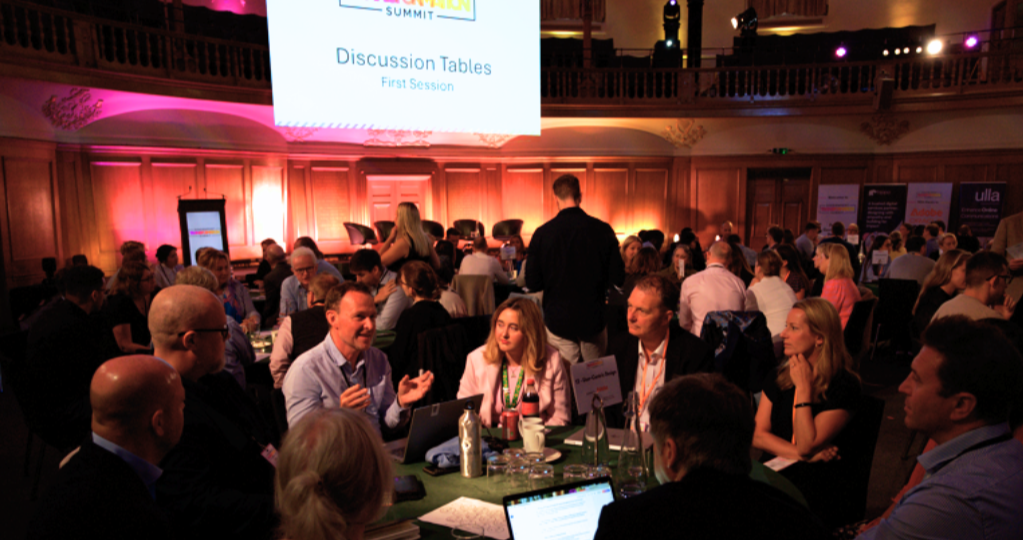
Transformation Strategy
This session explores how public sector leaders are moving beyond legacy systems to build joined-up, citizen-first services.
Discussion hosts:
-
Richard Baines, Deputy Director of Digital, DEFRA
-
Jane Brine, Deputy Director Bereavement Service and Tax Credits, HMRC
-
Rishi Sharma, Head of Public Sector, Esynergy
- Neil McIvor, Head of Data for Public Services, Esynergy
.jpg?width=347&height=104&name=example%20%20(500%20x%20150%20px).jpg)
Cross-Government Functions
This session explores how to enhance cooperation within and across different levels of government
- The practical barriers to standardising and integrating functions across departments.
- How are departments making cross-cutting collaboration work in practice, not just in principle?
- How integrating technology, standardising processes and centralising management can build a more efficient, agile and collaborative department
Discussion hosts:
-
Kate Caulkin, Director of People and Operational Management Insights, National Audit Office
- To be Announced soon.
Government Efficiency
This session explores how government departments can embed AI into end-to-end workflows to deliver measurable efficiency at scale.
- The practical barriers to integrating AI into existing processes, governance, and ways of working.
- How can departments connect AI across data, decisions, and actions, rather than relying on isolated use cases?
- How are departments moving from AI experimentation to measurable efficiency in practice?
Discussion hosts:
-
To be Announced soon.

Digital Workplace
Retaining talent, closing skills gaps and fostering innovation depends as much on internal tools and culture as it does on strategy.
- Building platforms, products and services that create a simple, joined-up and personalised experience for civil servants across departments
- Are your internal tools and working practices keeping pace with what your departments need to deliver?
- What it takes to put people genuinely at the centre of your department's digital transformation
Discussion hosts:
-
To be Announced soon.

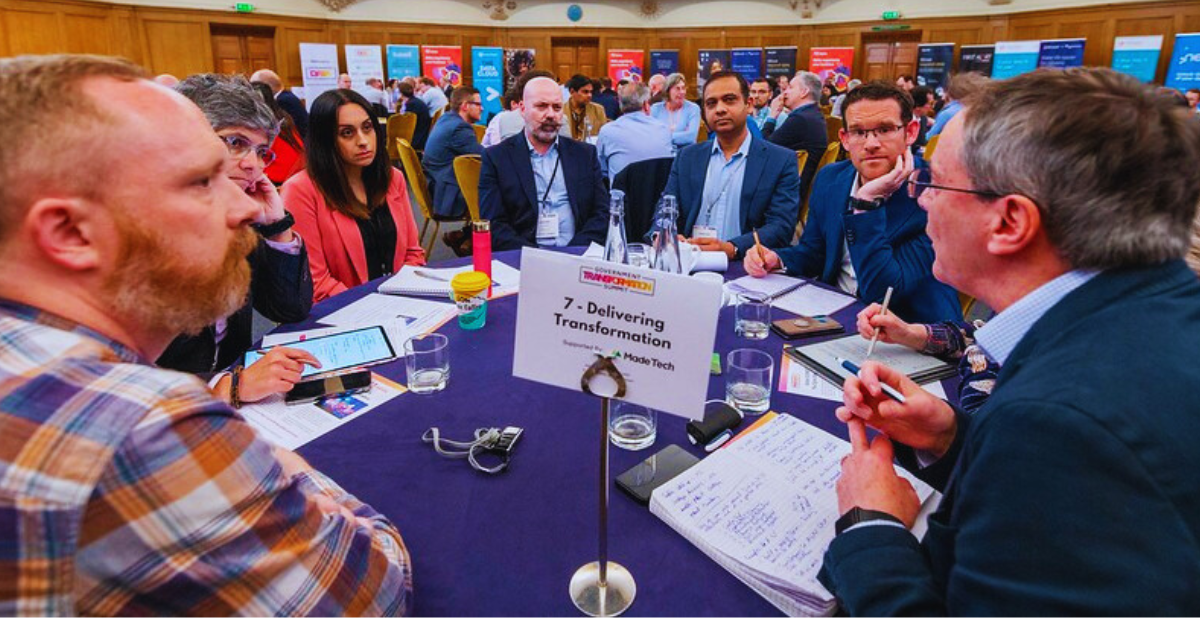
Operational Transformation
With one in four government digital systems outdated and growing pressure to deliver more with less, transforming how government operates is no longer optional. This session explores how departments can build the operational foundations needed to become faster, more efficient and more citizen-focused.
- Modernising the digital infrastructure and tools that underpin government operations, reducing complexity and enabling more efficient ways of working.
- Embedding operational transformation across departments, streamlining processes and connecting systems to improve service delivery.
- Delivering transformation at scale, moving beyond individual initiatives to build lasting operational capability across government.
Discussion hosts:
-
David Swainston, Finance Director, CDIO Portfolio, HMRC
-
Nagesh Reddy, Chief Portfolio Officer, DWP

Process Improvement
Siloed workflows, rigid procedures and manual hand-offs remain some of the most persistent barriers to effective public service delivery.
- How senior leaders are reimagining ways of working from the inside out to eliminate friction and foster collaboration.
- How much of your department's capacity is absorbed by processes that were never designed for the demands of modern government?
- Building the agile foundations that genuinely responsive government requires.
Discussion hosts:
-
To be Announced soon.
- To be Announced soon.

Accelerating legacy modernisation using AI
Legacy systems remain one of the biggest sources of risk and constraint across government, with modernisation often seen as too costly and complex to deliver at scale. This session explores how AI is changing what is possible for legacy modernisation.
- How AI is changing legacy modernisation, making migration faster, more feasible and more cost-effective.
- The practical barriers to modernising legacy systems at scale, and how emerging AI capabilities can help overcome them.
- The repeatable practices, tools and delivery patterns enabling more scalable and increasingly self-service approaches to modernisation.
Discussion hosts:
-
To be Announced soon.

Cutting Costs Without Cutting Capability
Fiscal pressure is forcing departments to find savings at the same time as demand for public services continues to rise, and the temptation is to cut what is easiest to measure rather than what matters least.
- Distinguishing genuine efficiency from short-term cost avoidance that simply moves spend elsewhere or stores up cost for later
- Where can your department take cost out without eroding delivery capacity, resilience or the skills you will need in three years' time?
- What senior leaders are doing to protect capability while meeting savings targets, and how they are evidencing the trade-offs
Discussion hosts:
-
To be Announced soon.

Data Sharing
Better outcomes for citizens increasingly depend on data moving safely between departments, agencies and local partners, yet sharing remains slow, inconsistent and heavily reliant on individual relationships.
- Navigating the legal gateways, information governance and risk appetite that determine whether data actually moves
- How do you make data sharing routine and repeatable rather than a bespoke negotiation every time?
- What senior leaders are doing to build the agreements, standards and trust that make cross-organisational data sharing work in practice.
Discussion hosts:
-
To be Announced soon.
- To be Announced soon.
Decision Making
Senior leaders are expected to make consequential decisions at increasing speed, often with incomplete evidence and competing pressures from policy, delivery and finance.
- Getting the right information to the right people at the moment a decision is being made, not weeks afterwards
- How confident are you that decisions across your department are informed by evidence rather than instinct or hierarchy?
- What senior leaders are doing to improve the quality, speed and transparency of decision making across their organisations.
Discussion hosts:
-
To be Announced soon.
- To be Announced soon.
Cross-Government Insights
Sharper decision-making across government depends on insight that transcends departmental boundaries, yet the infrastructure to surface it consistently remains underdeveloped.
- How harnessing technology, standardised processes and centralised functions can unlock the full potential of the DDaT profession
- How do senior leaders turn cross-government data into intelligence that drives informed decisions and reveals key trends?
- What it takes to translate shared insight into more effective public services and better outcomes in your own department.
Discussion hosts:
-
To be Announced soon.
- To be Announced soon.
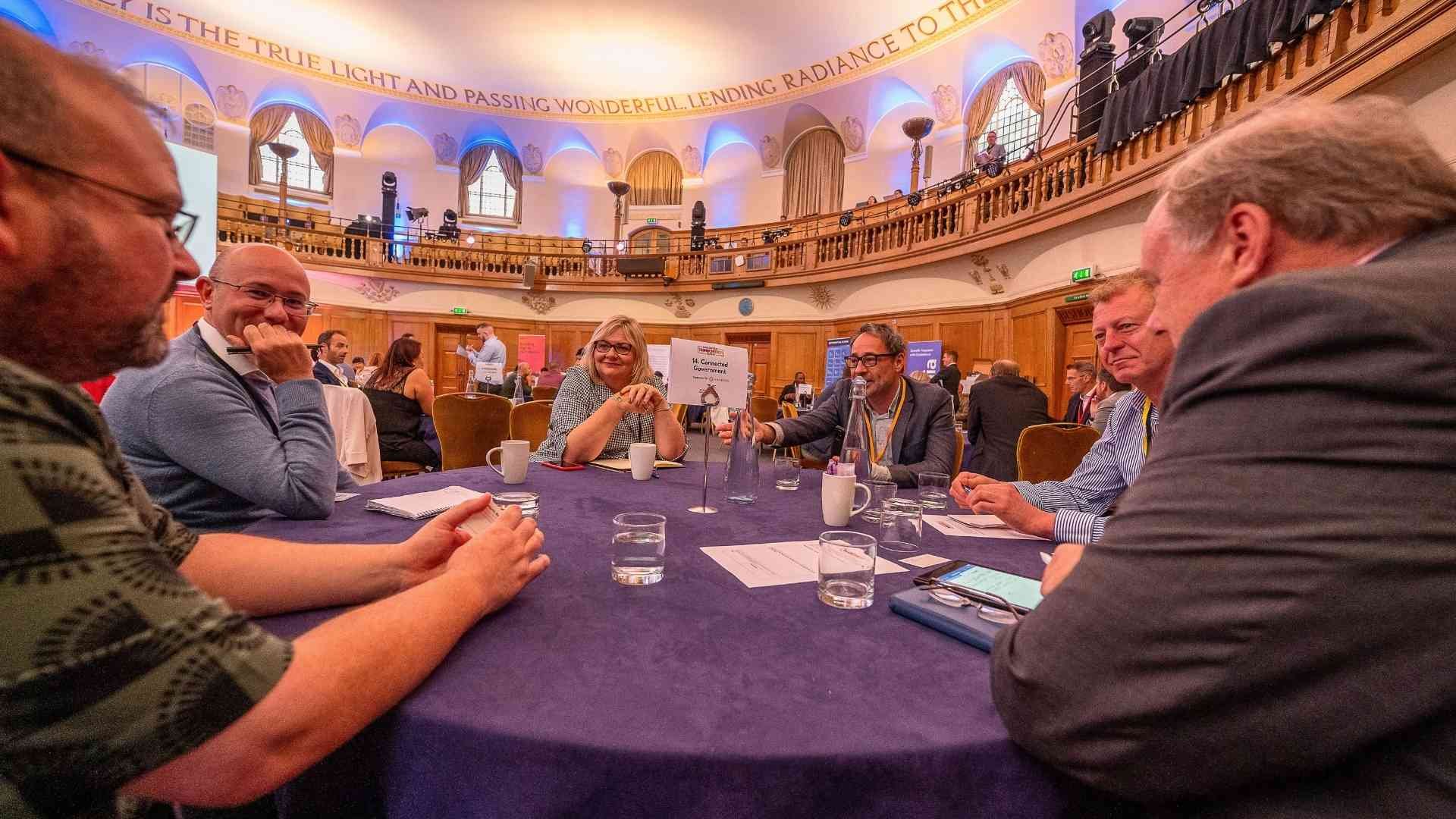
Data Optimisation
Good decisions depend on good data, yet poor quality, inconsistent and siloed data remains one of the most persistent barriers to effective government.
- Before departments can harness AI or advanced analytics, the data foundations must be right
- How do you build the governance, standards and culture needed to treat data as a strategic asset?
- How optimised, reliable data translates into better policy, sharper decisions and more responsive public services
Discussion hosts:
-
To be Announced soon.
- To be Announced soon.

Data Interoperability
Seamless service delivery across government depends on data that is accessible, readable and trusted, yet too many departments still operate in silos.
- Ensuring data works across different platforms, systems and agencies without sacrificing accuracy or integrity.
- How do you build the standards and governance needed to make cross-departmental data sharing a reality?
- How prioritising interoperability fosters better collaboration, sharper decision-making and improved outcomes for citizens.
Discussion hosts:
-
To be Announced soon.

.png?width=1200&height=627&name=GTS25_%20Day%201_Round%20Table%20(8).png)
Digital Experience
Seamless, inclusive digital services are no longer aspirations, they are expectations, yet significant barriers persist for too many citizens.
- Low digital confidence, inaccessible platforms and uneven service quality continue to leave people behind
- How do you design digital. experiences that work for everyone, not just the digitally fluent?
- What data insights and inclusive design can do to bridge the divide and raise the standard of service delivery across government.
Discussion hosts:
-
To be Announced soon.

Citizen Experience
Citizens increasingly expect public services to match the speed, simplicity and personalisation they experience elsewhere, yet the gap between expectation and delivery remains wide.
- Redesigning services around citizen needs without unlimited budgets or the luxury of starting from scratch.
- How do you close the gap between what citizens expect and what government can realistically deliver?
- Building the trust and responsiveness that genuinely citizen-centred public services depend on.
Discussion hosts:
-
Cathy Dutton, Deputy Director - Service Design & Delivery, Department for Education

User-Centric Design
The average UK citizen spends one and a half weeks a year navigating government bureaucracy, so how do we make it simpler?
- Building services that genuinely work for everyone, regardless of digital confidence, background or need.
- How do you embed user feedback, accessibility and inclusive design into the heart of service delivery?
- What it takes to reduce friction and build trust in citizen-facing services.
Discussion hosts:
-
Malcolm Casimir, Service Owner, Ministry of Justice
- To be Announced soon.
AI Strategy
Government’s ambition for AI is clear. The challenge now is turning that ambition into practical, deliverable strategies at departmental level. This session explores what it takes to move from national vision to confident execution.
- Translating national AI ambitions into departmental priorities, turning the AI Opportunities Action Plan into practical and achievable plans.
- Aligning investment, sequencing adoption and establishing effective governance to make AI a trusted, everyday part of how departments operate.
- Building a credible departmental AI strategy, with the leadership, capabilities and priorities needed to move from ambition to delivery.
Discussion hosts:
-
To be Announced soon.

AI Use Cases
The question for senior leaders is no longer whether to use AI, it is where to deploy it, how to scale it and how to ensure it delivers.
- With the AI Opportunities Action Plan in full flow and AI Exemplars already live across departments, practical real-world applications are moving beyond the experimental
- What can you learn from use cases across healthcare, welfare and policy delivery to accelerate responsible AI adoption in your own department?
- How to cut through the hype and identify the opportunities most likely to deliver in your context
Discussion hosts:
-
To be Announced soon.

Agentic AI
Agentic AI is moving government beyond systems that simply analyse and recommend towards systems that can act, make decisions and execute tasks. This session explores the opportunities this creates for more responsive public services, alongside the governance and safeguards required as AI becomes increasingly autonomous.
- Exploring where agentic AI can transform public services, from automating casework and triaging public health data to managing complex infrastructure systems.
- Understanding what greater AI autonomy means for government, particularly when systems begin to take actions and make decisions on behalf of public sector organisations.
- Building transparency, accountability, cybersecurity and public trust into agentic AI, ensuring greater autonomy is matched by appropriate governance and human oversight.
Discussion hosts:
-
To be Announced soon.

Operationalising AI
Moving AI from promising pilot to embedded, everyday tool remains the defining delivery challenge for senior civil servants across government.
- The gap between experimental AI projects and the scaled, reliable deployment needed to drive meaningful change in how public services are designed and delivered
- How do you build the infrastructure, governance and organisational conditions needed to take AI out of the lab and into the mainstream?
- What senior leaders are doing to move beyond the pilot phase and embed AI into the core operations of their department?
Discussion hosts:
-
To be Announced soon.
.png?width=183&height=122&name=Red_Hat-Logo.wine%20(1).png)
Generative AI
From automating routine tasks to making sense of vast datasets for policy, the possibilities of Generative AI across government are colossal, but knowing where to start is the defining challenge.
- Do you pursue the quick wins that build momentum and demonstrate value, or invest in the systemic transformation that delivers at scale?
- How do you sequence your GenAI ambitions in a way that is credible, responsible and builds confidence across your organisation?
- What senior leaders are doing to move from experimentation to meaningful, lasting deployment
Discussion hosts:
-
To be Announced soon.
- To be Announced soon.
AI Governance
Responsible AI deployment across government depends on governance frameworks that are robust in practice, not just in principle.
- Developing and implementing the structures needed to oversee AI systems with confidence, from policy to procurement to deployment
- How do you move from theory to practice and build frameworks that genuinely underpin public trust in government's use of AI?
- What effective AI governance looks like at departmental level and how to lead it without stifling innovation?
Discussion hosts:
-
Eilidh Mclaughlin, Deputy Director, Digital Ethics, Inclusion and Assurance, Scottish Government

AI Sovereignty
As government deepens its reliance on AI, a critical question emerges: who controls the technology underpinning our public services?
- From data sovereignty and supply chain dependencies to geopolitical risk, AI sovereignty is fast becoming a strategic leadership concern
- How do you reduce exposure to foreign-owned infrastructure without slowing the pace of responsible AI adoption?
- What it means in practice to build a resilient, independently capable AI ecosystem at departmental level?
Discussion hosts:
-
To be Announced soon.

AI for Public Services
AI is moving out of internal productivity tools and into the services citizens actually use, which raises the stakes considerably for accuracy, accessibility and accountability.
- Applying AI to casework, correspondence, eligibility and frontline service delivery where errors have direct consequences for the public
- Where does AI genuinely improve the service a citizen receives, and where does it simply add a layer between them and a decision?
- What senior leaders are doing to deploy AI in public-facing services in a way that is safe, explainable and demonstrably better for users?
Discussion hosts:
-
Keith Dargie, Chief Information and Digital Officer, COPFS

2025 Discussion Tables
Transformation Strategy
Discussion hosts:
Kate Caulkin - Director of People and Management Insights, National Audit Office
Jane Brine - Deputy Director, Bereavement Service and Tax Credits Operations, HMRC
Fiona McAdoo, Transformation Director, Public Services, Oracle
Chris Burstow, Account Executive, UK Central Government, Oracle
True transformation requires more than technology—it demands leadership, vision, and collaboration. This session explores how government leaders can align digital, data, and AI strategies to deliver measurable public value and cultural change.
In partnership with:

Data Sharing
Discussion hosts:
Rob Malcomson - Deputy Director of Data, Analytics and AI, Cabinet Office (Public Sector Fraud Authority)
Dean Paulley - Head of Product, Ordnance Survey
Pete Haddock, Public Sector Lead, esynergy
Neil McIvor, Head of Public Sector, esynergy
How can government agencies collaborate effectively to share data while ensuring privacy and security? Explore the frameworks and practices that enable responsible data sharing to drive informed decisions, streamline processes, and enhance citizen services.

AI Use Cases in Government
Discussion hosts:
Jenny O'Connor - Deputy Director, End User Compute Services, Department for Education
Lee Dunn - Head of Profession for Digital & Data, Scottish Government
Sam Ineson, Public Sector Director, Valtech
Sam Parker, Client Partner, Valtech
Showcasing real-world applications of AI across government — from optimising back-office efficiency to improving frontline services. What lessons can be learned from early adopters as departments turn pilots into proven impact?

User-Centric Design
Discussion hosts:
Verity Hislop, Programme Manager, Digital Office for Scottish Local Government
Malcolm Casimir - Digital Service Owner, Ministry of Justice
Tim Daley, Strategy & Transformation Director, Perago
By integrating user-feedback, catering to diverse populations and ensuring accessibility for varying levels of digital literacy, we can move towards a system which streamlines and enhances interactions, while building trust and boosting satisfaction

Better Decision Making
Discussion hosts:
Situl Gajjar - Head of Strategy & Delivery, Ministry of Justice
Ruqaiya Isa - Deputy Director of Assurance & Partnerships, Department for Education
David Wheable, Head of Consulting, Forrester
Solomon Blakeley, Public Sector Account Manager, Forrester
Civil Servants and policymakers need sharper, faster insights than ever before. This session explores how public sector leaders can access accurate, real-time data to shape smarter, evidence-based decisions and deliver better public outcomes.
In partnership with:
Agentic AI
Discussion hosts:
Tommaso Spinelli - Senior Artificial Intelligence Change Manager, Government Digital Service
Nayyab Naqvi - Principal Technologist for AI Enablement, Government Digital Service
Will Dorrington, Chief Technology Officer, Kerv
John Foote, Head of Sales, Kerv
As AI systems gain autonomy, what does it mean to delegate decision-making to machines in government? Explore how transparency, accountability, and human oversight can safeguard trust as agentic models emerge.

Cross-Government Insight
Discussion hosts:
Chris Chambers - Programme Director for National Data Library, Department for Science, Innovation and Technology
Simon Price - Director of AI, Innovation and Insight at HM Revenue and Customs
Pritesh Patel, Public Sector Leader, Databricks
Harneet Singh, Sr Specialist, AWS
Every department holds invaluable data, but too often, these insights remain siloed. What could be achieved if they were shared across policy and delivery? Hear how forward-thinking leaders are breaking down boundaries to unlock the full potential of joined-up government.
In partnership with:

AI Use Cases
Discussion hosts:
Simon Short - Director of Data and Analytics, Homes England
Lee Cramp, Chief AI Officer, Department for Health and Social Care
Pete Morris, Digital Transformation Senior Manager, Accenture
Naomi Wass, Managing Director, Accenture
From fraud detection to public health monitoring, discover how departments are using AI to drive efficiency, improve accuracy, and transform public service delivery.
In partnership with:

Government Efficiency
Discussion hosts:
David Swainston, Finance Director of CDIO Directorate, HM Revenue & Customs
Lucia Webster, Deputy Director for Digital Delivery, Cabinet Office
Tracey Howson - Practice Lead Interaction Analytics, FourNet
Paul Mooney - Central Government Account Director, FourNet
Data-driven efficiency helps departments target resources, reduce duplication, and deliver measurable value. As fiscal pressures rise, how can senior leaders harness data to embed sustainable efficiencies across government?
In partnership with:

AI Governance
Discussion host:
Phillipa Nazari, Director of Data, British Business Bank
Richard Puttick, Chief Information Officer at Defence Support, Ministry of Defence
Liz Cook, Director - Central Government, ServiceNow
Graham Williamson, Director -Enterprise Architecture UK&I, ServiceNow
Balancing innovation with accountability. How can leaders establish governance frameworks that ensure AI systems are transparent, unbiased, and trusted by citizens?

Operationalising AI
Discussion hosts:
Sumitra Varma - Deputy Director, Data Engineering, Data Science and AI, Ministry of Justice
Molly Adamat - Head of Data Management, HM Treasury
Lewis Crawford, Chief AI Officer, Equal Experts
Rich Lister, Engagement Manager, Equal Experts
Embedding AI into the fabric of public sector operations. How can departments move beyond pilots to scale AI securely, ethically, and effectively across everyday workflows?

Process Improvement
Discussion hosts:
Ade Bamigboye, Chief Technology Officer, Royal Borough of Kensington & Chelsea
Sam Pittam-Smith, Head of Transformation, Cheshire East Council
Ted Twaalfhoven, Founder & CEO, Engage Process
Laurence Allen, Director - UK, Engage Process
Government organisations face constant pressure to do more with less. By combining lean methodologies, automation, and better data use, departments can streamline workflows and unlock capacity.

Service Modernisation
Discussion hosts:
Neil Hall, Deputy Director for Platform Capabilities, Government Digital Service
Priya Basker, Head of Data Engineering, Ministry of Justice
Zoë Gould, Product Director, Deloitte,
Palwinder Kaur, Human Capital Director, Deloitte
Citizens expect seamless, accessible, and trustworthy services. By embedding user-centric design into transformation, departments can deliver simpler, more inclusive, and more satisfying digital experiences.
In partnership with:

Data Interoperability
Discussion hosts:
John Kelly - Director of Data, Infected Blood Compensation Authority
Simon Navin - Head of Geospatial Services, Ordnance Survey
Nigel Bennett, Senior Solutions Advisor, Dun & Bradstreet
David Mitton, Head of Government UKI, Dun & Bradstreet
Explore best practices for improving interoperability across departments. How can shared standards and readable data formats foster collaboration, better decision-making, and streamlined public services?

Transformation Strategy
Discussion hosts:
Ivana Gordon - Deputy Director, GCG Services, Government Commercial and Grants Directorate, and Senior Responsible Owner of Central Digital Platform, Cabinet Office
Michelle Williams, Head of IT Asset Management, DWP
Chris Morgan, Chief Executive Officer, ITSX
As departments mature in their digital journeys, aligning transformation with long-term mission outcomes becomes critical. This session examines how to evolve transformation strategy from isolated innovation to a whole-of-government change agenda that delivers lasting public value.
In partnership with: